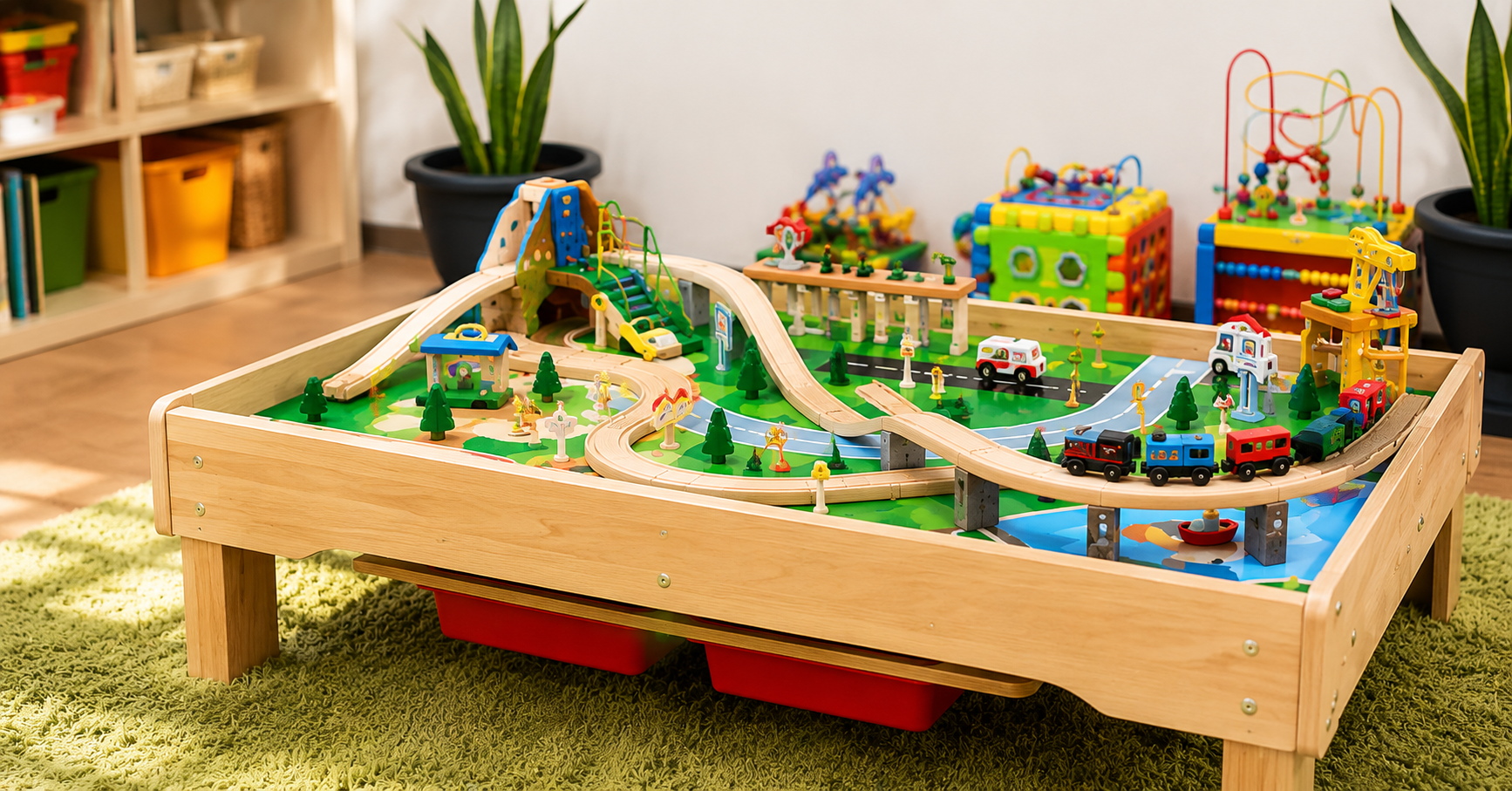
Wooden Toys Vs Plastic Toys For Child Development
When parents look at toys for young children, the choice often comes down to more than colour or price. It is really about how the toy supports growth, attention, imagination, movement, and everyday learning. Wooden toys and plastic toys both have value, but they work in different ways. Some toys help children slow down and focus, while others bring quick excitement and sound. The best choice depends on what kind of play the child needs most.
How Wooden Toys Support Child Development
Calm play that builds concentration
Wooden toys often feel simple, steady, and quiet. That is one reason many children stay with them for longer periods. There is less noise and less flashing action, so the child can focus better.
- Helps children stay with one activity longer
- Supports patience and steady thinking
- Encourages problem-solving without rushing
- Makes it easier to explore one idea in depth
Strong support for imagination
Wooden toys usually do not tell children exactly how to play. That open style is powerful because it lets the child decide what the toy becomes.
- A block can become a tower, a car, or a bridge
- A simple set can turn into a whole pretend world
- Children make their own rules during play
- Creativity grows when there is no single right answer
Hands-on learning through texture and shape
Wooden toys often have a natural feel in the hand. Children notice weight, shape, and balance more clearly when the toy is simple and solid.
- Supports sensory awareness
- Helps children understand size and balance
- Builds fine motor control
- Encourages careful movement and grasping
How Plastic Toys Support Child Development
Bright features that catch attention
Plastic toys often use lights, sounds, and bright colours to grab a child’s attention quickly. For some children, that can be exciting and fun.
- Draws attention fast
- Can help early cause-and-effect learning
- Keeps younger children engaged for short play periods
- Adds energy and variety to playtime
Useful for early skill practice
Some plastic toys are made for clear learning goals, such as colours, letters, shapes, or simple counting. These toys can be helpful when used the right way.
- Supports early learning through repeated practice
- Helps with matching, sorting, and naming
- Can introduce numbers and letters in a simple way
- Works well for quick learning moments
Easy for busy homes and groups
Plastic toys are often light and easy to clean, which makes them practical for families and group settings.
- Easy to wipe down
- Simple to carry from room to room
- Usually available in many shapes and sizes
- Good for busy everyday use
Wooden Toys vs Plastic Toys in Daily Play
Wooden toys often support deeper play
Wooden toys are often better for slow, focused play that keeps a child thinking.
- Good for building and stacking
- Works well in pretend play
- Helps children stay calm and centred
- Encourages longer attention spans
Plastic toys often support active play
Plastic toys can be more lively and stimulating, especially when they include sound or motion.
- Great for quick interaction
- Useful for movement-based play
- Can make learning feel exciting
- Often appeals to children who like variety
Both toy types can be helpful
The best playrooms do not always choose one over the other. A mix can give children a healthier balance.
- Wooden toys for imagination and focus
- Plastic toys for sound, colour, and quick engagement
- Together, they create different kinds of learning
- Variety helps children explore in more than one way
What Matters Most in Child Development
The child matters more than the toy
A toy does not build development on its own. What matters most is how the child uses it and whether it fits their stage of growth.
- Age and interest should guide the choice
- Simple toys can be powerful when used well
- Repeated play often builds stronger skills
- A child-led approach often works best
Open-ended play is especially useful
Toys that allow many kinds of play often support stronger learning. Children think more when they have to decide what to do.
- Encourages creativity
- Builds decision-making skills
- Supports independence
- Helps children solve small problems on their own
Too much stimulation can be tiring
Some toys are exciting, but constant noise or flashing effects can overwhelm children. That is why balance matters.
- Simple toys can reduce distraction
- Quiet play can support focus
- Children often need both active and calm moments
- Less noise can sometimes mean better play
Easy Tips for Choosing Toys
A simple checklist for parents
- Choose toys that match the child’s age
- Look for toys that can be used in more than one way
- Pick toys that support movement, thinking, or creativity
- Avoid toys that do everything for the child
- Use a mix of calm toys and active toys
- Focus on play value, not just appearance
Final Thoughts
Wooden toys and plastic toys both have a place in child development. Wooden toys often support imagination, focus, and open-ended learning. Plastic toys often bring colour, sound, and quick interaction. The strongest choice is usually not one or the other. It is the right mix for the child’s age, needs, and daily play style.
Help Your Child Learn Through Better Play Choices
Choosing the right toys can make everyday learning more meaningful for children. Simple and thoughtful play materials often help children build creativity, confidence, focus, and problem-solving skills naturally.
At Montessori Early Development Academy, hands-on learning and child-led exploration are encouraged because meaningful play supports healthy development in powerful ways. When children are given opportunities to explore through balanced and engaging activities, they often grow into more confident and curious learners over time.
FAQs
Q. Are wooden toys better than plastic toys?
A. Wooden toys often support focus and imagination, while plastic toys can be useful for quick learning and sensory play. Both can help in different ways.
Q. Do plastic toys harm child development?
A. Not automatically. Plastic toys can be useful if they are age-appropriate and used in balance with quieter, more open-ended toys.
Q. Which toy type helps creativity more?
A. Wooden toys usually help creativity more because they leave room for pretend play, problem-solving, and flexible thinking.
Q. Should children have both wooden and plastic toys?
A. Yes. A mix often works best because it gives children different kinds of play, from calm building to bright, active learning.
Q. What is the most important thing when choosing toys?
A. The toy should match the child’s age, support safe play, and help them think, move, build, or imagine in a natural way.